
Collector guide · 2 min read
Foil, Holo, Parallel and Alternate Art Trading Cards: What Is Different?
A plain-English guide to common card variation terms and why the exact label depends on the product line.
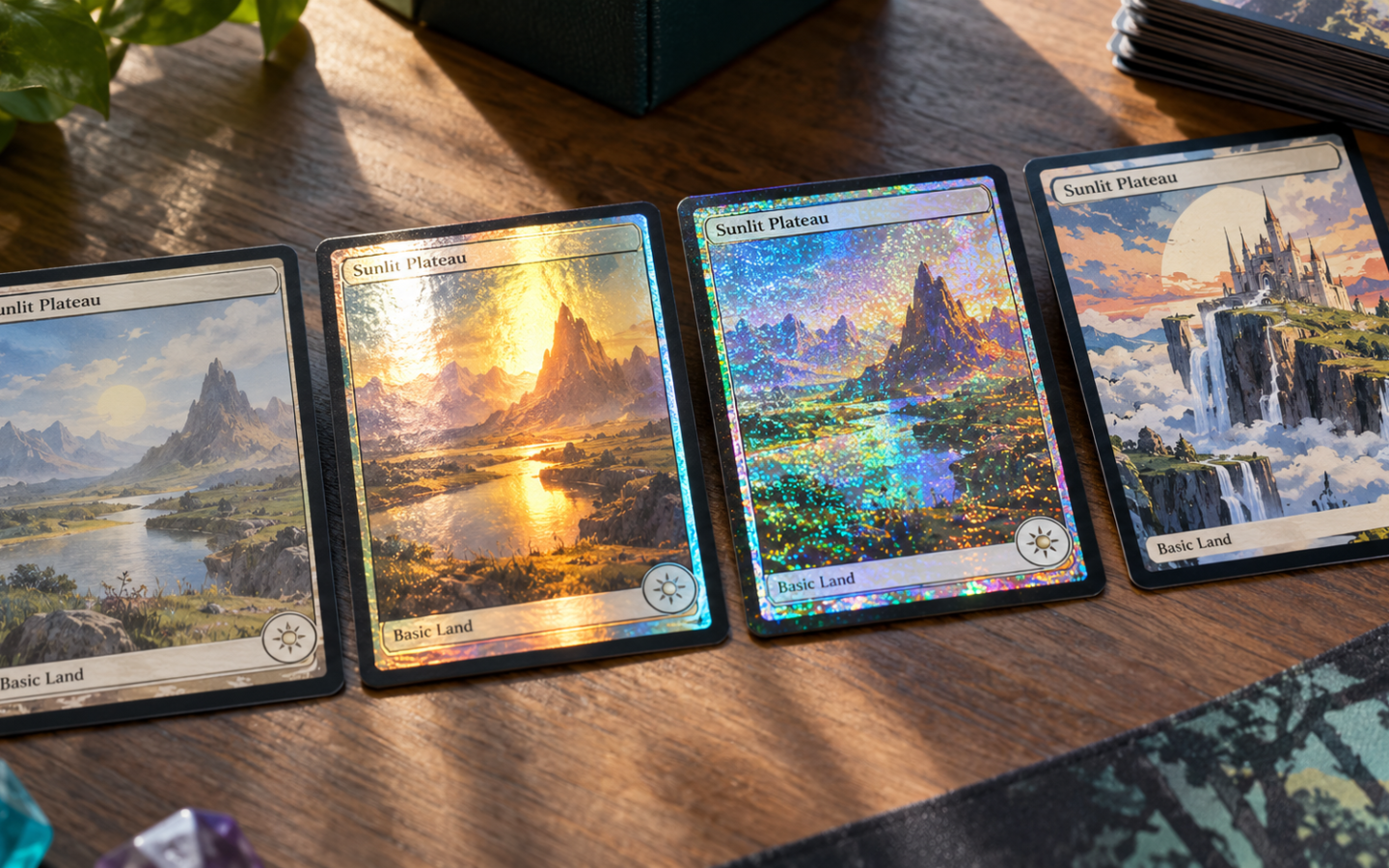
Collectors use terms such as foil, holo, parallel and alternate art every day, but those words do not mean exactly the same thing across every game or card line. The safest approach is to treat them as clues and then confirm the specific terminology used for that release.
Foil and holo
Both terms generally describe reflective or light-reactive treatments, but the location and style of the effect can differ. One product line may use “holo” for a reflective image area and another may describe a full-card treatment differently. Check the official or widely accepted naming for the set you are collecting.
Parallel
A parallel is a version that shares the underlying card design or identity with a base card but changes a feature such as color, foil pattern, border, serial numbering or another production detail. Sports cards use the term heavily, but similar ideas exist in other collectible lines.
Alternate art
Alternate-art versions use different artwork or presentation from the standard version. The card name or gameplay function may stay the same while the collectible identity and demand differ.
Texture and special finishes
Textured surfaces, etched foil and other premium finishes can be difficult to identify from a single photograph. If the treatment affects price, look for angled photos or other evidence that makes the finish visible.
Stamps and promotional marks
A stamp, event logo or promotional mark can turn an otherwise familiar design into a separate collectible version. Check whether the mark is part of the official release rather than assuming it was added later.
Serial-numbered versions
Serial numbering usually shows that a copy belongs to a limited numbered run. Do not confuse a serial such as 23/99 with the card’s set or catalogue number.
Why photographs can be misleading
Lighting, sleeves, scanners and camera processing can make reflective treatments look stronger or weaker than they are. Compare multiple images and the written variation label. If the two disagree, verify before buying.
Use a complete identity, not one buzzword
Instead of searching only for “holo” or “parallel,” combine the card name, set, number and the exact variation label. That makes it easier to avoid mixing prices from different versions.
For a full identification workflow, read How to Identify the Exact Printing of a Trading Card Before You Buy.
Collector help