
Collector guide · 2 min read
How to Compare Trading Card Prices Without Mixing Different Versions
Learn how to compare card prices like-for-like instead of mixing base cards, variants, languages and conditions.
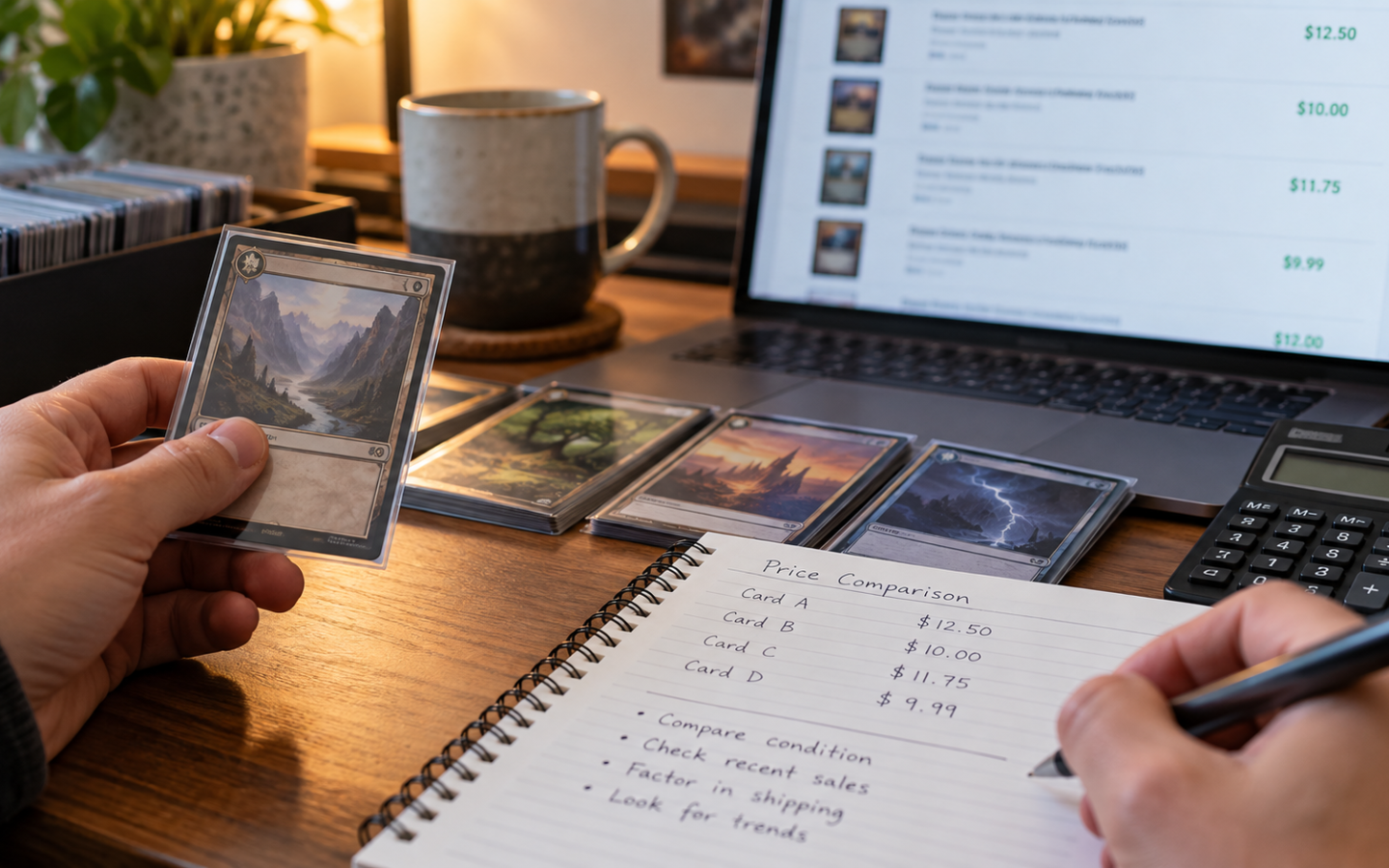
The cheapest listing is not automatically the market price, and the highest listing is not automatically the value of your card. Useful price comparison starts by making sure the cards being compared are actually comparable.
Match the exact printing first
Confirm the set, card number, artwork, language, edition and treatment. If one listing is a base version and another is an alternate art or numbered parallel, their prices should not be combined into one comparison.
Match condition
A damaged copy and a clean copy are different buying propositions. For raw cards, compare photographs and stated condition. For graded cards, compare the same grading company and the same or nearby grade where possible.
Separate asking prices from completed sales
An asking price shows what a seller wants. A completed sale shows a transaction that actually happened. Both can be useful, but they answer different questions. A single unusually high or low transaction should not automatically define the market.
Check the date
Collectible markets change. Older sales can provide context, but recent comparable transactions are usually more useful when you are deciding what a current listing means.
Account for language and regional releases
Do not automatically treat different language releases as interchangeable. Demand, print runs and collector preferences can differ. Compare the same language first, then use other releases only as secondary context.
Watch for hidden differences in listings
Confirm whether the price includes shipping, whether the card is actually in stock, whether it is the exact photographed copy and whether the seller’s title matches the image. A listing that looks cheaper can become less comparable once those differences are considered.
A simple comparison worksheet
- Write the exact identity of the card.
- Collect several genuinely comparable listings or completed sales.
- Remove obvious mismatches.
- Note condition, grade, language, date and shipping separately.
- Look for a reasonable range rather than one magic number.
If you are unsure about the identity line, start with Trading Card Numbers, Set Codes and Variants Explained.
Collector help