
Collector guide · 2 min read
Raw vs Graded Trading Cards: What Buyers Should Check
A practical comparison of raw and graded cards, with the checks that matter before paying a premium.
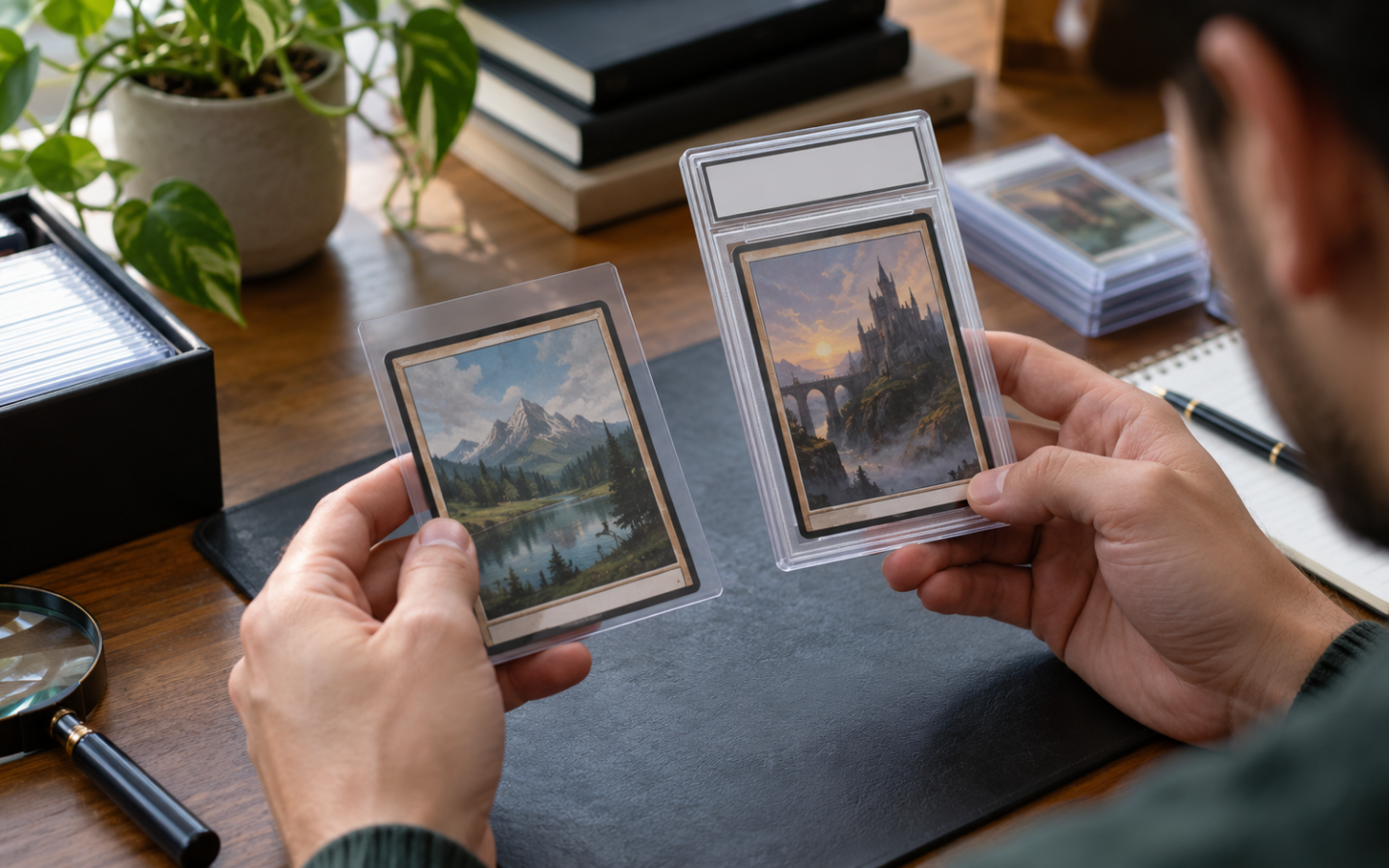
A raw card is not automatically worse than a graded card, and a graded card is not automatically the better purchase. They solve different problems for different collectors.
What “raw” means
Raw generally means the card is not sealed in a third-party grading holder. Raw cards can be ideal for binders, sets and collectors who prefer to inspect the card directly. The trade-off is that you must judge condition from the listing information and photographs.
What “graded” means
A graded card has been evaluated and encapsulated by a grading company, normally with a label identifying the card and a numerical or descriptive grade. That can make condition comparison easier, but you still need to verify the exact printing shown on the label and the card itself.
Identify first, grade second
A grade tells you about the submitted copy. It does not replace the need to identify the card. Start with the set, card number, artwork, variation and language. Our exact-printing guide covers that process.
What to inspect on a raw card
- front and back surface;
- corners and edges;
- centering where relevant;
- scratches, dents, creases or print defects;
- clear photographs taken outside a sleeve when practical;
- whether the description matches the visible card.
What to inspect on a graded card
- the grading company;
- the label description and card number;
- the grade;
- the certification number when available;
- holder condition;
- whether the label identifies the same printing you expected.
Why graded cards can cost more
The market may place a premium on authentication, encapsulation, a high grade or population scarcity. That premium is not fixed and it can vary sharply by card. Compare sales or listings for the same card, same grading company and similar grade rather than comparing a graded copy with an unrelated raw copy.
When raw can make more sense
Raw can suit collectors completing binders, collecting lower-value cards, or buying cards where the grading premium matters more than encapsulation. It can also give you more flexibility if you want to submit the card for grading yourself later, though no future grade should be assumed.
When graded can make more sense
Graded can suit collectors who value a third-party condition opinion, want a protected holder, or are comparing premium copies where small condition differences matter. The important part is paying for a card you actually understand, not simply paying for the number on the label.
Before buying either format, use our online trading-card buying checklist.
Collector help