
Collector guide · 4 min read
How to Identify the Exact Printing of a Trading Card Before You Buy
A practical collector guide to identifying the exact version of a trading card before buying.
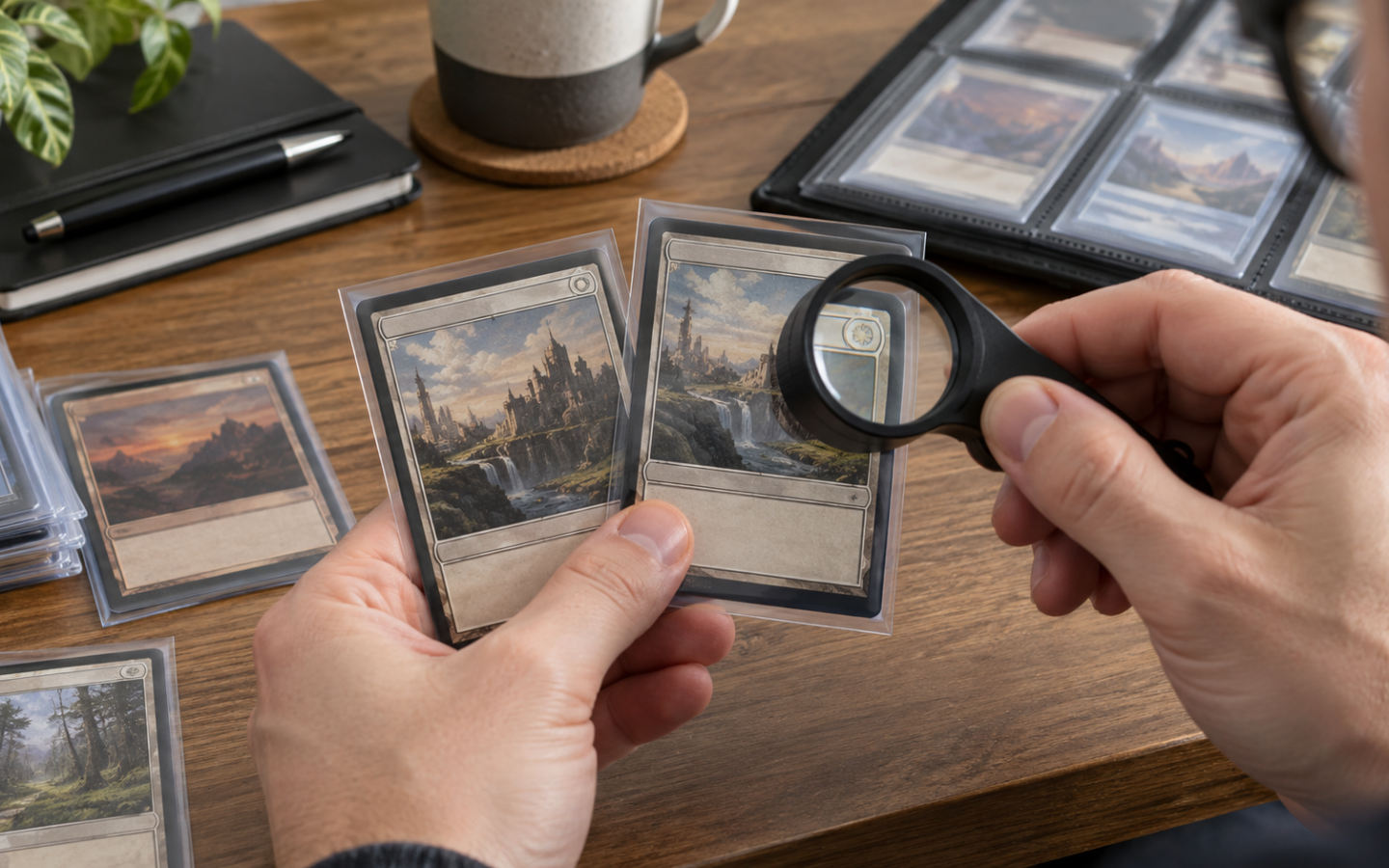
Two trading cards can feature the same character, athlete, artwork style or name and still be different collectibles. A reprint, parallel, promotional release, alternate artwork, language edition or foil treatment can change exactly which card you are looking at.
That is why identifying the exact printing of a trading card matters before you buy. The goal is not simply to recognize the subject on the card. It is to match the specific release, card number, set, variation and physical treatment as closely as possible.
Why the exact printing matters
Collectors often search by a character or player name first. That is useful for discovery, but it is not always enough for identification. The same subject may appear in multiple sets, years, languages, promotional releases or special versions.
When two versions look similar, confusing them can lead to buying the wrong card, comparing the wrong prices, or thinking a card is rarer than it really is. Exact identification is especially useful when you are completing a set, comparing listings, checking a premium version, or deciding whether a price makes sense.
1. Start with the card number
The card number is often the fastest clue. It may appear as a simple number, a fraction, or as part of a code that identifies the set and card position. Compare the number shown in the listing with the number visible on the card itself.
2. Check the set name or set code
After the card number, identify the set or release. A useful search format is card name + card number + set or set code + variation. That is normally more precise than searching the card name alone.
For a fuller explanation, read our guide to card numbers, set codes and variants.
3. Compare the artwork carefully
Alternative artwork is one of the easiest differences to notice, but artwork should not be your only test. Compare the illustration or photograph, border design, logos and symbols, copyright text, stamps, promotional marks and the position of the card number.
4. Look for foil, parallel and surface treatments
Two cards can share the same base design but use different physical treatments. Depending on the product line, that may be described as foil, holo, refractor, parallel, textured, stamped, numbered or another special treatment. Lighting and sleeves can hide these differences in photographs, so use multiple images when possible.
Our guide to foil, holo, parallel and alternate-art cards explains the terminology in more detail.
5. Verify the language and regional release
An English-language card and a Japanese-language card may share artwork but still be separate releases. Some products also have regional differences, different release dates or packaging-specific versions. When comparing prices, compare the same language and release whenever possible.
6. Separate the card’s identity from its condition
Printing tells you which version of the card it is. Condition tells you the physical state of that particular copy. Terms such as raw, near mint, lightly played or graded do not identify the printing by themselves.
If you are deciding between slabbed and ungraded copies, see Raw vs Graded Trading Cards.
7. Check promotional marks, serial numbering and edition details
Promotional cards, event releases, stamped cards and serial-numbered cards can be easy to confuse with regular releases. Read the small details. A stamp, serial number, event logo or edition mark can change the identity of the card.
A simple identification method
- Read the full listing title, but do not rely on it alone.
- Find the card number or code on the card image.
- Match the set or release associated with that number.
- Compare artwork, borders and symbols.
- Check foil, parallel or surface treatment.
- Confirm language and edition details.
- Only then compare condition and price with the same version.
If one detail conflicts with another, stop and verify before paying.
Common mistakes collectors can avoid
Searching only by the character or player name
This can mix many releases together and makes price comparisons unreliable.
Assuming similar artwork means the same printing
Reprints, parallels and special treatments can look very similar in ordinary photographs.
Comparing the cheapest listing without matching the version
A low price may belong to a base card, different language, different condition or different printing. Use our price-comparison checklist before treating two listings as comparable.
Ignoring listing photographs
Titles and descriptions can contain mistakes. Compare the written information with the actual card images whenever possible.
Buying checklist
- card name;
- card number;
- set or release;
- year, where relevant;
- artwork or image variation;
- foil, parallel or surface treatment;
- language;
- promo, stamp or edition markings;
- serial numbering, if applicable;
- condition or grade;
- whether the photos match the description.
When a listing clearly separates these details, it becomes much easier to compare the card with other copies of the same printing.
How CardSet Market approaches variations
CardSet Market is built around identifiable printings and variations rather than assuming every card with the same name is the same item. Where meaningful differences exist, the aim is to make details such as card number, printing, artwork and variation easier to understand while browsing.
Explore the CardSet Market card database or use our collector guides for more buying and identification help.
Collector help